The Pause That Separates One Task from the Next
A pause between tasks gives your day clearer edges. Try simple cues that mark an ending and a beginning without adding another job to your list.
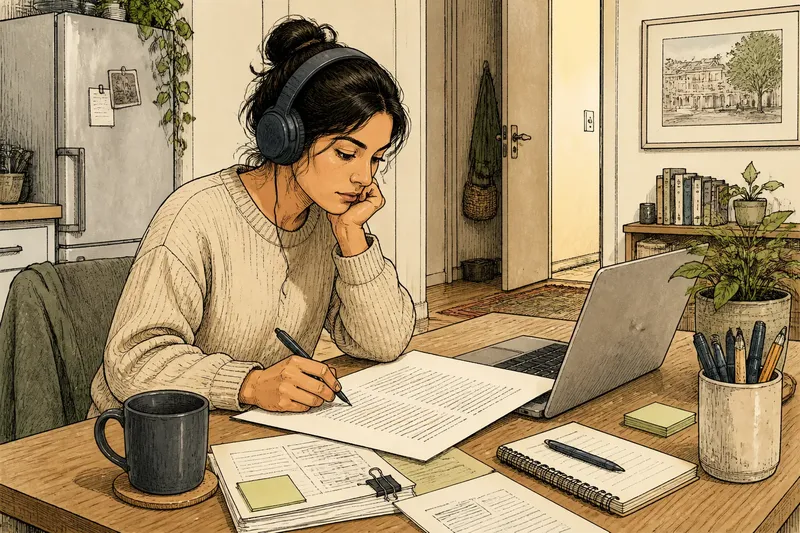
You close a spreadsheet, but your mind is still sorting its columns as you open a message from a colleague. A pause between tasks can mark the change more clearly—not as another item to complete, but as a small space in which one activity ends before another begins.
What does a transition pause change?
Tasks often blur together because their practical endings and mental endings do not coincide. You may save a document and move on while still holding a question about it, or finish a call while carrying its tone into the next conversation. A transition pause gives you a chance to notice that residue before choosing what comes next.
This is not a promise that every task will feel neatly finished. Some work remains open, and interruptions happen. The useful distinction is between stopping an action and noticing that you have stopped it. That moment can make the day feel less like one long, tangled activity.
Think of the pause as a doorframe, not a waiting room. You do not need to linger there; you need only register that you are crossing from one space into another.
How can you make the pause visible?
A pause is easier to notice when it has a simple cue. Choose something already near the boundary between activities rather than inventing a new routine. The cue should be visible or easy to feel, and it should not require a special setting.
- Close the work surface: Shut a notebook, minimize a window, or put a pen down when a task ends.
- Change your posture: Stand after a seated task, or settle your shoulders before starting a new one.
- Look away from the screen: Let your eyes rest on a neutral point in the room for a moment.
- Move one object: Slide a finished page aside or place the next item in front of you.
- Use a plain sentence: Silently name what has ended and what you are choosing to begin.
These are cues, not a checklist. Pick one that fits the place and the kind of work. If a pause begins to feel like a rule you can fail, simplify it or drop it.
What questions come up about pausing between tasks?
How long should a transition pause last?
Let it be long enough to notice the boundary, rather than aiming for a set duration. A breath, a moment to close a notebook, or the walk from one room to another may be enough.
What if the next task is urgent?
Keep the pause small: register that the previous task has stopped, then turn to the urgent one. If you can, leave a brief note about where the earlier task stands so it is easier to pick up later.
Should I pause after every task?
No. Use a transition when the change feels meaningful, such as moving from solo work to a conversation or from work to home responsibilities. Several closely related actions may belong to one continuous stretch.
What if the previous task still feels unfinished?
Name the open point in a note or in a short sentence to yourself, then identify the next action you can take later. This does not finish the task; it gives your attention a clearer place to return.
How do you keep the pause from becoming another task?
Do not score yourself for pausing, track how often you do it, or demand a particular feeling afterward. The point is to make a boundary noticeable, not to produce calm on command. If you miss the moment, the next transition is still available.
Keep the cue proportionate to the change. Moving from one paragraph to the next may not need anything. Ending a difficult call before beginning a separate piece of work may benefit from a more visible signal, such as standing and closing the call notes. A small cue is like setting down a cup: it marks that your hand is free, without asking you to perform a ceremony.
Also consider the setting. At a shared desk, a quiet physical cue may be more practical than speaking aloud. At home, walking to another room might naturally divide work from household activity. Use what the surroundings already offer, rather than rearranging them to support an elaborate ritual.
What does a pause look like in an ordinary day?
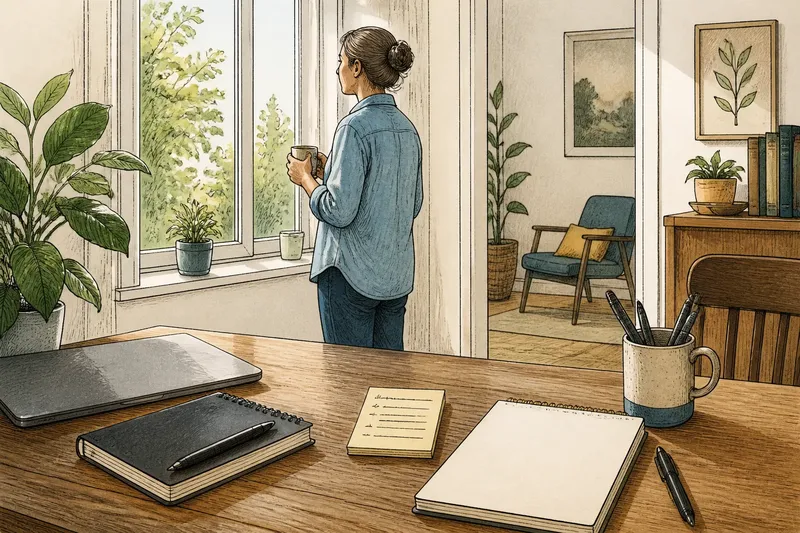
Say you finish answering messages at the kitchen table and need to start preparing a presentation. You save the draft, close the message window, and write “presentation outline” on a blank page. Then you stand, look toward the window for a moment, and sit down with the page in front of you. The observable result is a clear change of materials and attention: the message work has stopped, and the outline is now the next activity. No special mood or perfect finish is required.
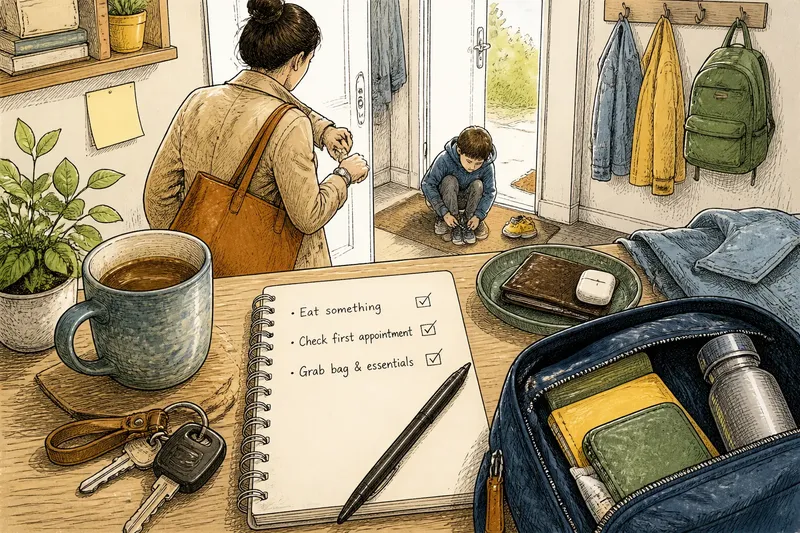
On a crowded day, the transition may be smaller. You might put the phone face down before joining a family conversation, or close a book before returning to a household task. A pause between tasks can take the shape of the boundary already available to you.
Try one cue at a transition you regularly notice today. If it makes the change easier to see, keep it; if it adds friction, choose a simpler signal. The most useful pause is one that leaves room for the next task without pretending the previous one vanished.